




BUILD YOUR BUSINESS. STRENGTHEN YOUR PEOPLE.
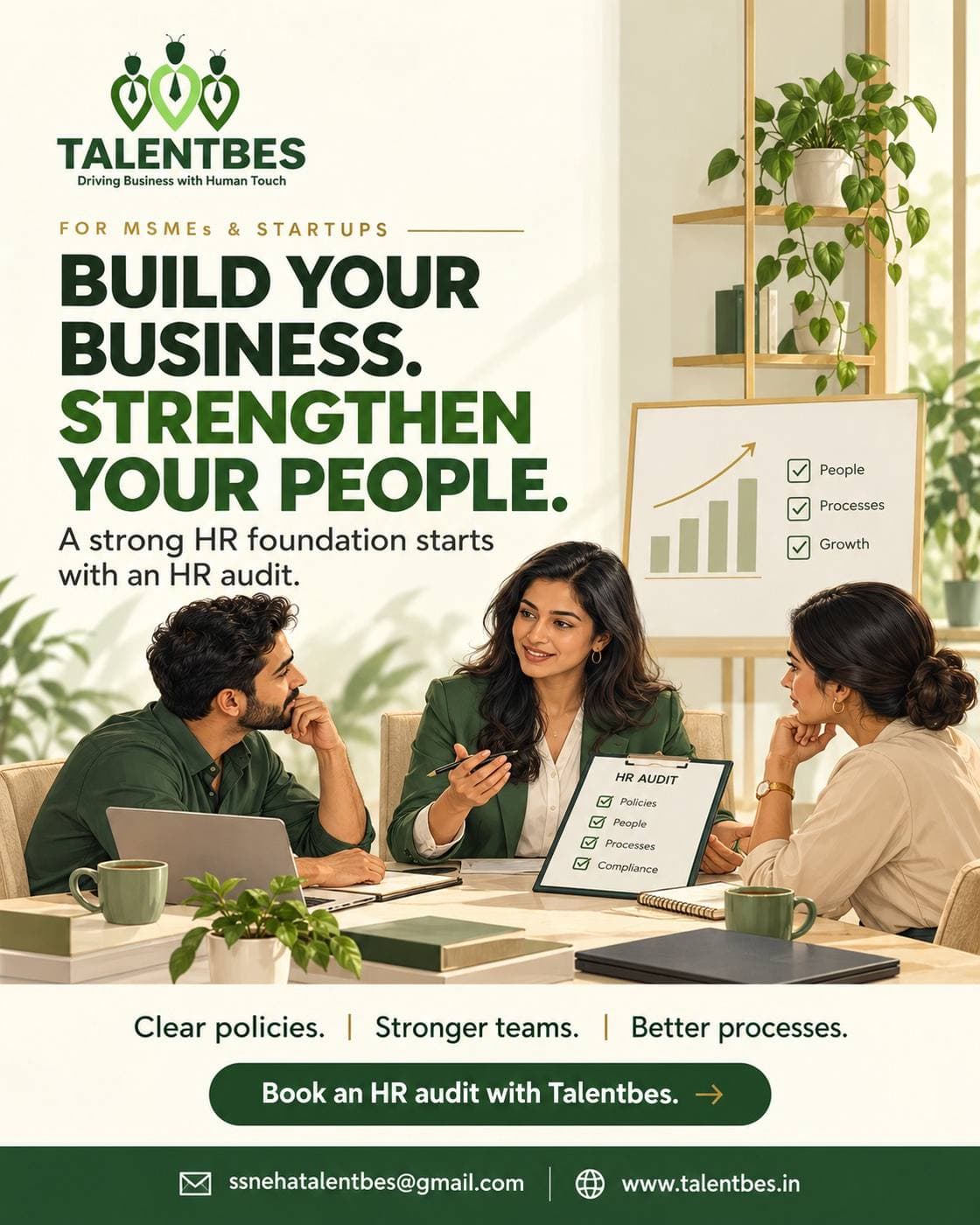
Business growth requires more than capital, technology and market opportunity. It requires a capable workforce, effective leadership and people processes that support consistent execution.
For MSMEs and startups, establishing an HR framework early can strengthen organisational accountability, improve workforce planning and support informed business decisions.
Recent research highlights the importance of this investment.
Gallup’s State of the Global Workplace 2026, based on 2025 data, reported global employee engagement at 20%, with manager engagement at 22%. These findings reinforce the need to examine leadership capability, role clarity and employee experience alongside business performance.
Published case studies offer practical insights:
1. Formalising HR practices in a growing SME CIPD’s 2017 case study of “Architect Co.”, an anonymised UK practice employing 30 people, identified challenges involving communication, performance reviews and remuneration decisions.
External HR support introduced formal policies, structured induction, appraisal processes and leadership coaching. The report noted greater clarity and reduced conflict concerning pay and promotions, while highlighting the importance of sustained management commitment.
2. Aligning workforce capability with technological change A 2026 CIPD case study of “Finance Co”, an anonymised UK bank, examined the introduction of an AI coding assistant.
Consultation with developers identified requirements for skills development, coaching and appropriate performance measures. The people team established workstreams focused on collaborative learning and management capability.
The implication for MSMEs and startups: HR capability should develop alongside operational capacity and technological investment.
How does an HR audit support this objective?
An HR audit provides a structured assessment of existing policies, documentation and workforce practices. It can help identify gaps across:
▪ HR governance: Policies, employee documentation and consistent application of procedures ▪ Workforce planning: Organisational structure, role clarity and staffing requirements ▪ Talent acquisition: Recruitment, selection and onboarding practices ▪ Performance management: Objectives, review mechanisms and managerial accountability ▪ HR operations: Attendance, leave, payroll coordination and employee records ▪ Compliance readiness: Areas requiring review against applicable employment requirements ▪ Capability development: Leadership, employee skills and changing business needs
The value of an audit lies in translating findings into a prioritised implementation plan, with defined ownership, timelines and measurable progress.
A full-time HR department may not be necessary at every stage. Defined HR accountability remains essential.
At Talentbes Executive Search Services, we support MSMEs and startups through HR audits, HR process design, recruitment and outsourced HR services.
Build an HR foundation that supports your next phase of growth.
Let's talk about your next hire.
Request a consultation